
If you’re searching for an Ayurvedic hospital in Kota, you’re likely trying to answer a few practical questions: What kind of treatments are actually available? What does Panchakarma involve, and is it right for you? And what should you expect when you sit down for a consultation? This guide walks through all three, along with what to look for when comparing local providers, so you can make an informed decision before booking an appointment.
What Is an Ayurvedic Hospital?
An Ayurvedic hospital is a healthcare facility that practices Ayurveda — a traditional system of medicine that originated in India thousands of years ago and is still practiced today under the regulatory oversight of India’s Ministry of AYUSH. Unlike a small clinic offering a single therapy, a proper Ayurvedic hospital typically has qualified BAMS (Bachelor of Ayurvedic Medicine and Surgery) doctors, dedicated therapy rooms, and the ability to run structured, multi-day treatment programs such as Panchakarma under supervision.
In a city like Kota, which has a growing number of wellness and skin-care clinics advertising Ayurvedic treatment, the word “hospital” matters. It generally signals a higher standard of infrastructure and clinical oversight than a single-room therapy center, though it’s still worth verifying credentials directly rather than assuming based on the name alone.
What to Look for in an Ayurvedic Hospital in Kota
Before choosing a provider, it helps to know what separates a credible Ayurvedic hospital from a generic wellness spa using Ayurvedic branding. A few things worth checking:
- Accreditation and registration. Look for recognition such as NABH (National Accreditation Board for Hospitals & Healthcare Providers) accreditation, which reflects adherence to defined quality and safety standards, and confirm the facility is registered with the relevant state health authorities.
- Qualified practitioners. Doctors should hold a BAMS degree (and sometimes an MD in an Ayurvedic specialization), not just general wellness training.
- Transparency about services. A credible hospital will clearly list the therapies it offers rather than making vague promises of a “complete cure.”
- Individualized care. Reputable providers assess each patient before recommending a treatment plan rather than applying the same protocol to everyone.
- Willingness to refer out. A trustworthy Ayurvedic doctor will tell you when a condition needs conventional medical evaluation alongside, or instead of, Ayurvedic care.
Understanding Ayurvedic Treatments
Ayurvedic treatment is built around the idea that health reflects a balance between mind, body, and daily habits, and that imbalance shows up differently in each person. This is why two people with what looks like the same skin condition, joint issue, or digestive complaint may be given different treatment plans.
Why Individual Assessment Matters
Before recommending any therapy, a qualified Ayurvedic doctor typically evaluates a patient’s constitution (often described in terms of dosha types), current symptoms, medical history, and lifestyle. This assessment is what allows a treatment plan to be tailored rather than generic. If a provider recommends a specific therapy or herbal formulation without first reviewing your history and current health status, that’s worth asking about.
What to Ask About a Recommended Treatment
Whether the recommendation is an herbal regimen, a topical therapy, a dietary change, or a Panchakarma program, it’s reasonable to ask:
- What is this treatment intended to address, and how does it work?
- How long is the typical course, and how will progress be assessed?
- What results are realistic, and over what timeframe?
- Are there side effects, contraindications, or interactions with other medications I’m taking?
- What happens if the condition doesn’t improve as expected?
A provider who welcomes these questions and answers them clearly is generally a good sign. Vague reassurance without specifics is worth treating with caution.
What Is Panchakarma in Ayurveda?
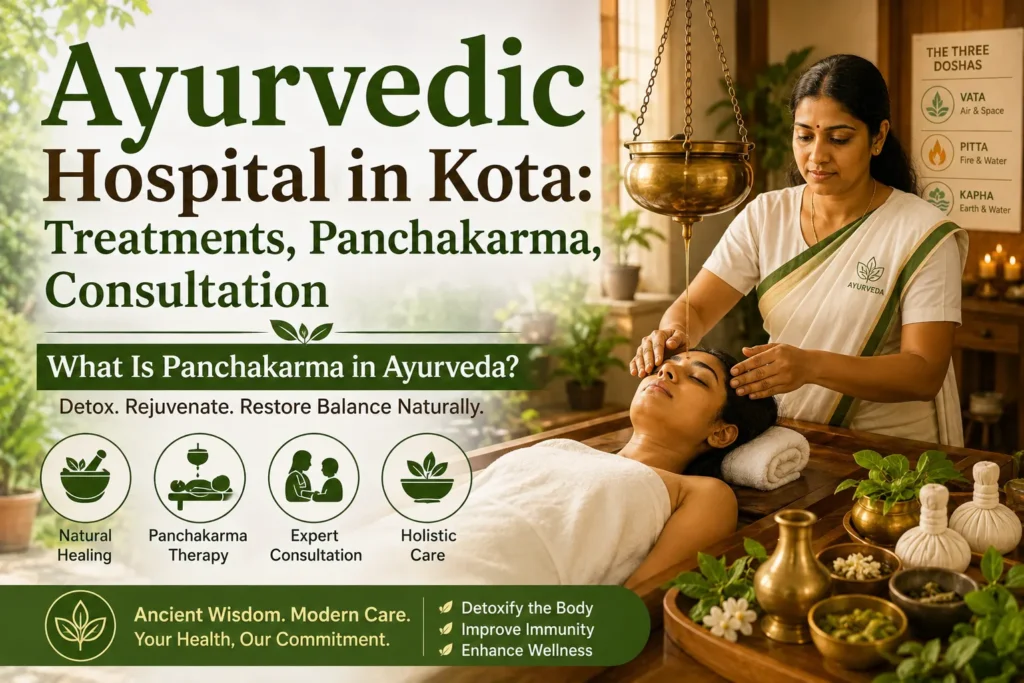
Panchakarma refers to a set of five classical Ayurvedic detoxification and rejuvenation procedures — traditionally including therapeutic emesis, purgation, medicated enemas, nasal administration of herbal preparations, and bloodletting (the last of which is rarely practiced in modern clinical settings). In contemporary practice, “Panchakarma” is often used more broadly to describe a structured program of preparatory oil massage, steam therapy, and one or more of these core cleansing procedures, typically carried out over several days under supervision.
It’s important to understand what Panchakarma is not. It is not a single universal treatment appropriate for every person or every condition, and it is not a guaranteed cure or a substitute for conventional medical treatment where that is indicated. Reputable sources are clear that its suitability depends on the individual’s constitution, current health status, age, and any underlying medical conditions.
Why Panchakarma Requires Individual Assessment
Because Panchakarma procedures are physically intensive — involving induced purgation or emesis in some protocols — they aren’t appropriate for everyone. Pregnancy, certain cardiac conditions, active infections, recent surgery, and several other health situations can make some Panchakarma procedures unsuitable or require significant modification. This is precisely why a proper pre-procedure assessment (sometimes called purva karma evaluation) by a qualified practitioner matters, rather than starting the process based on a walk-in request.
Questions to Ask Before Panchakarma
If a Panchakarma program is recommended to you, consider asking:
- Which specific procedures are included, and why are they suited to your case?
- What is the doctor’s assessment of your suitability for this program?
- What preparation (diet, medication adjustments) is required beforehand?
- What does recovery and aftercare look like?
- What outcomes can realistically be expected, and what can’t Panchakarma address?
- Is the procedure being performed by trained therapists under a qualified doctor’s supervision?
Be cautious of any provider that presents Panchakarma as a one-size-fits-all detox package or claims it will cure a specific diagnosed disease. Traditional Ayurvedic texts describe Panchakarma primarily as a means of restoring balance and supporting the body’s own processes — that is a different claim from curing a named medical condition, and the distinction matters when you’re evaluating marketing claims.
What to Expect From an Ayurvedic Hospital in Kota
An Ayurvedic consultation may involve a fairly detailed conversation, more so than a typical short clinical visit. Expect the doctor to ask about your health history, current symptoms, digestion, sleep, stress levels, diet, and daily routine, since Ayurvedic assessment looks at the whole picture rather than an isolated symptom. Pulse examination and physical observation are also commonly part of a traditional Ayurvedic evaluation.
Information to Share With the Doctor
To get the most useful consultation, it helps to come prepared with:
- A clear description of your main concern and how long you’ve had it
- Any prior diagnoses, treatments, or medications (Ayurvedic or conventional)
- Known allergies or sensitivities
- Relevant lifestyle details — diet, sleep, stress, physical activity
- Any conventional medical reports relevant to your condition
Questions Patients Can Ask
- What is your assessment of my condition, and what is it based on?
- What treatment options are available, and why is this one recommended for me?
- How long before I might notice a change, and how will we track progress?
- Should I continue or pause any conventional medications during treatment?
- When would you recommend I also see a conventional doctor?
That last question matters. A responsible Ayurvedic practitioner will tell you when a symptom — persistent pain, unexplained weight loss, signs of infection, or anything that could indicate a serious underlying condition — needs conventional diagnostic evaluation, rather than treating Ayurveda and modern medicine as mutually exclusive.
How to Evaluate an Ayurvedic Healthcare Provider in Kota
With several Ayurvedic clinics and hospitals operating in Kota, a practical comparison usually comes down to:
- Credentials — accreditation status and the qualifications of the treating doctors.
- Specialization — whether the hospital has particular experience with your specific concern (skin conditions, joint and spine issues, digestive or liver-related complaints, and so on).
- Track record and experience — how long the hospital has been operating and treating patients.
- Transparency — clear information about treatments, realistic expectations, and pricing, rather than only testimonials.
- Facility standards — hygiene, dedicated therapy space, and appropriate infrastructure for procedures like Panchakarma.
- Communication — whether questions are answered clearly and whether the provider is willing to coordinate with, or refer you to, conventional medical care when appropriate.
Ayurvedic Skin Care and When Professional Evaluation Matters
Skin conditions are one of the most common reasons people search for an Ayurvedic doctor near me or an Ayurvedic skin doctor near me. Conditions such as psoriasis, eczema, vitiligo, acne, and chronic itching or pigmentation issues are frequently discussed in Ayurvedic practice, which generally frames them as reflecting internal imbalance rather than treating them as purely surface-level problems — hence the emphasis on detox therapies, herbal formulations, and dietary changes alongside topical treatment.
That said, skin conditions can sometimes be a sign of, or coexist with, an underlying condition that needs proper diagnosis. If a skin issue is sudden in onset, spreading rapidly, associated with systemic symptoms (fever, joint pain, unexplained fatigue), or simply isn’t improving over a reasonable period, that’s a signal to seek a formal diagnostic evaluation — Ayurvedic or conventional — rather than continuing self-directed treatment.
How to Evaluate Ayurvedic Health Claims Online
Ayurveda has a long history and a growing body of modern research behind some of its practices, but online marketing claims often outrun the evidence. When researching any Ayurvedic hospital in Kota — or elsewhere — it’s worth applying a bit of scrutiny:
- Be skeptical of claims promising a guaranteed “cure” for chronic or complex conditions.
- Look for whether a provider distinguishes between traditional Ayurvedic concepts and clinically established evidence, rather than blending the two without qualification.
- Treat patient testimonials as anecdotal, not evidence of what you should expect.
- Check whether the hospital is transparent about practitioner qualifications and accreditation, not just before-and-after photos.
- When in doubt, ask directly what evidence supports a specific treatment claim.
Considering Ayurvedic Care in Kota
Kota has a number of Ayurvedic clinics and hospitals, and it’s worth reviewing a few directly — comparing accreditation, doctor qualifications, treatment specialization, and consultation process — before deciding where to go.
One local option worth knowing about is Punarnav Ayurveda Panchkarma and Skin Care Hospital, located in Mahaveer Nagar, Kota. Based on its official information, it is an NABH-accredited Ayurvedic hospital that describes itself as one of the longer-established Ayurvedic facilities in the city, with over 20 years in operation. It focuses on skin, spine, joint, and liver-related treatment, with its therapy offerings organized under categories such as detox programs, detox and rejuvenation therapies, Panchakarma-based therapies, and specialized skin and wellness treatments. Its treating team includes BAMS-qualified doctors. As with any provider, it’s worth confirming current accreditation status, treatment details, and doctor availability directly with the hospital before booking, since this kind of information can change over time.
Whichever hospital you choose, the same principles apply: verify credentials, ask specific questions about your individual assessment and treatment plan, keep expectations realistic — especially around Panchakarma — and stay open to conventional medical evaluation when your symptoms call for it.
Conclusion
Choosing an Ayurvedic hospital in Kota comes down to more than proximity or advertising. A credible provider will assess you individually, explain what a treatment or Panchakarma program actually involves, set realistic expectations, and be transparent about their qualifications. Use your first consultation to ask direct questions, and don’t hesitate to seek conventional medical evaluation alongside Ayurvedic care when your situation calls for it.
This article is for general educational purposes and does not replace individualized medical advice. Consult a qualified healthcare professional to evaluate your specific condition and treatment options.
