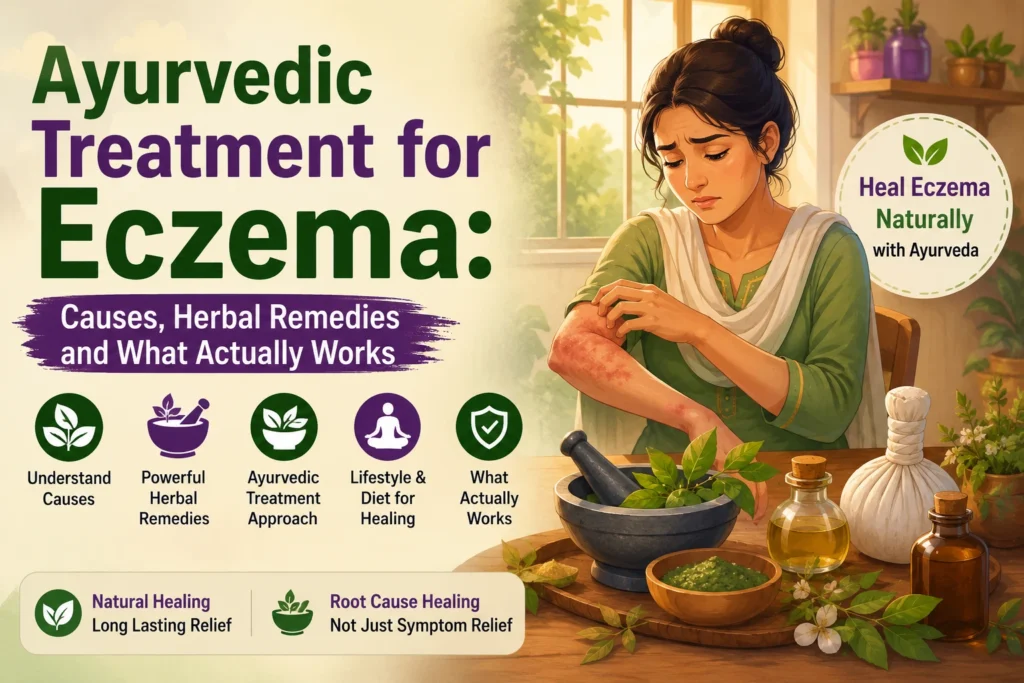
If you’ve been searching for an ayurvedic doctor near me at 2 a.m. because the itching won’t let you sleep, you already know how exhausting eczema can be. It’s not just dry, red patches — it’s the constant scratching, the broken sleep, the self-consciousness about how your skin looks in a photo or a saree blouse. Most people try a steroid cream first, get relief for a few weeks, and then watch the flare-up return, often worse than before so try to get Ayurvedic Treatment for Eczema with trusted Ayurveda.
That cycle is exactly why so many people in Kota eventually start looking for an ayurvedic hospital in Kota instead of another tube of cream. Ayurveda doesn’t just treat the visible rash; it looks at digestion, immunity and lifestyle to understand why the skin is reacting the way it is. But not every clinic calling itself “Ayurvedic” is genuinely equipped for this. This article walks through what eczema actually is, how Ayurveda approaches it, and what to check before you trust anyone with your skin for Ayurvedic Treatment for Eczema.
What Eczema Really Is, and Why It’s Hard to Treat
Eczema (atopic dermatitis) shows up as dry, inflamed, often intensely itchy patches of skin, commonly on the hands, elbows, knees or face. It tends to flare and settle in cycles, often triggered by stress, weather changes, certain foods, or contact with soaps and synthetic fabrics.
The frustrating part is that conventional treatment often manages the symptom — the inflammation — without addressing why the skin barrier keeps breaking down in the first place. That’s where a lot of patients start hunting for an ayurvedic skin doctor near me, hoping for something that looks at the root cause rather than just calming the surface.
In Ayurveda, eczema is largely understood as a Pitta-Kapha imbalance affecting the skin (twak) and blood tissue (rakta dhatu), often linked to poor digestion (agni) and accumulated toxins (ama). That’s a very different starting point from “apply this cream twice a day,” and it’s why the treatment approach looks different too.
There’s also an emotional cost to eczema that doesn’t get talked about enough. People change what they wear, avoid certain gatherings, or feel constantly aware of visible patches on their hands or face. Sleep suffers because the itch is often worse at night. Over months or years, that wears a person down in ways that go beyond the skin itself, which is part of why patients eventually want a treatment plan that actually explains what’s happening, not just something to suppress the next flare.
Common triggers vary from person to person, but tend to include harsh soaps, synthetic fabrics, sudden weather shifts, certain foods, and periods of high stress. Identifying which of these actually apply to you, rather than avoiding everything on a generic list, is usually where a proper consultation earns its value.
What Actually Makes a Hospital Qualified to Treat Eczema as a Ayurvedic Treatment for Eczema
Anyone can put “Ayurvedic” on a signboard. What genuinely matters is a bit more boring, and a bit more important:
Accreditation and standards. Look for NABH accreditation, which means the hospital has been independently assessed against clinical and safety standards, not just self-declared.
Years of focused clinical experience. Skin conditions respond to pattern recognition built over years of seeing similar cases, not a general wellness background.
A genuine specialisation in skin, not just a general Panchakarma menu with eczema tacked on as one line among fifty.
Transparent, realistic communication. Any hospital promising a permanent “cure” for a chronic, relapsing condition like eczema should raise a question mark, not confidence. The Ministry of AYUSH sets the broader regulatory framework Ayurvedic practice in India operates within, which is worth knowing as a baseline.
Punarnav Ayurveda: A Hospital Built Around Skin
Punarnav Ayurveda Panchkarma and Skin Care Hospital, based in Mahaveer Nagar, Kota, ticks most of these boxes on paper. It’s NABH-accredited, operates as a unit of Wild Herb Ayurveda, and is often described as one of the earliest dedicated Ayurveda skin clinics in the region, with 20+ years of Ayurvedic experience behind it.
Skin is genuinely the hospital’s flagship focus, alongside spine, joint and liver conditions, rather than a side offering.
Eczema Care at Punarnav
For eczema specifically, the approach isn’t a single cream or tablet. It typically combines internal herbal medicine to work on digestion and blood purification, external applications to calm the active flare, and dietary correction, since certain foods are known to aggravate Pitta and Kapha and worsen itching. You can read more about eczema treatment at Punarnav in detail.
Related Skin Conditions
Patients with eczema often also ask about psoriasis, since the two are frequently confused. If that’s relevant to you, it’s worth reading up on the different types of psoriasis to understand how the two conditions differ in presentation and treatment.
How the Ayurvedic Treatment for Eczema Actually Works
The clinical process generally follows a structured path rather than a one-size-fits-all prescription.
Assessment first. The doctor examines the skin, asks about digestion, sleep, stress and diet, and tries to identify your specific dosha imbalance and triggers, because two people with eczema can have very different root causes.
Panchakarma-based therapies where needed. For deeper or more stubborn cases, Panchakarma-based therapies are used to support detoxification before herbal medicine is introduced, so the body absorbs the treatment more effectively.
Herbal medicine and topical care. Internal formulations aim to correct the underlying imbalance, while external applications are used to soothe active inflammation and itching.
Diet and lifestyle counselling. Since flare-ups are often diet-triggered, patients typically receive specific guidance on foods and routines to avoid during an active phase, and how to reintroduce a broader diet once the skin stabilises. Some patients also choose to find your skin’s dosha type as a starting point for understanding their own triggers.
Detox and rejuvenation support. Once the acute phase settles, the focus shifts toward the benefits of Panchakarma therapy for longer-term skin resilience and reducing the frequency of relapse.
Both in-person visits at the Mahaveer Nagar hospital and virtual consultations are offered, which matters for patients travelling in from Jaipur, Udaipur, Delhi or Lucknow, since Panchkarma centres near Kota aren’t always accessible to out-of-town patients for every follow-up.
What Patients Say about Ayurvedic Treatment for Eczema
Reviews matter more for a health decision than almost any other purchase, because you’re trusting someone with your body. Punarnav Ayurveda is rated 4.8/5 on Justdial, and has built a visible community around its results — its Instagram page, followed by over 2,700 people, is largely made up of patient updates and healing journeys rather than promotional posts. That pattern — a steady stream of real people documenting relief after Panchakarma, rather than a handful of polished testimonials — tends to say more than any single review can.
What to Ask Before You Book Ayurvedic Treatment for Eczema
Before committing to any Ayurvedic hospital for eczema, whether it’s this one or another, it’s worth asking a few direct questions:
- Is the hospital NABH-accredited, and can they show it, not just claim it?
- Has the doctor actually treated eczema cases specifically, or mostly other conditions?
- What does the treatment timeline realistically look like — weeks, months, longer — and what results should you expect at each stage?
- Will they explain your specific dosha imbalance and triggers, or just hand you a generic herbal kit?
- Do they offer virtual consultations if you’re not local, so follow-ups don’t require repeated travel?
A hospital that answers these clearly and without pressure is usually a safer bet than one that leans hard on discounts or urgency.
Frequently Asked Questions
Can Ayurveda actually cure eczema permanently?
No responsible clinic will promise a permanent cure, since eczema is a chronic, relapsing condition. What Ayurvedic treatment aims for is long-term relief, fewer and milder flare-ups, and better control over triggers, which for many patients is a meaningfully different experience from constant steroid dependence.
How long does Ayurvedic treatment for eczema usually take to show results?
This varies by case severity and how long the condition has been active, which is why an initial in-person or virtual assessment matters before anyone gives you a timeline.
Is Panchakarma safe for skin conditions like eczema?
Panchakarma-based therapies are used specifically to support detox and rejuvenation as part of skin treatment, and are typically recommended after an assessment of your case, not as a blanket first step for everyone.
Should I stop conventional treatment before starting Ayurveda?
This is a decision to make with your doctors rather than on your own; Ayurveda is often used alongside timely medical care rather than as a replacement for it, particularly during an active, severe flare.
Is there an ayurvedic hospital near me in Kota that specialises specifically in skin?
Punarnav Ayurveda in Mahaveer Nagar is one option worth researching, given its skin-focused Panchakarma work, verified on Google and its Justdial reviews, though it’s always worth confirming exact services and current availability directly before visiting.
If Eczema Has Been Running Your Life, It’s Worth a Proper Conversation
Eczema doesn’t have to be something you just manage in silence with the next steroid tube. If you’re looking for a genuinely skin-focused, NABH-accredited option among the best ayurvedic hospital in Kota candidates, it’s worth having a real conversation about your specific case rather than guessing from a website. You can book a consultation with Punarnav Ayurveda’s team directly to discuss your eczema history, triggers and realistic next steps. With proper analysis of Ayurveda you can defeat eczema from your present with right ayurvedic treatment.

One Response